

New Zealand Antique Prints
& Rare Books
The On-line
Gallery
Books may also be seen at:
New Zealand Birds’
(The Greytown Gallery)
101 Main Street
Post Office Box 146
Greytown, 5742
Wairarapa
New Zealand
Telephone 0064 6 304 8080
narena@nzbirds.com
The Magazine of Botany and Register of Flowering Plants, edited by Sir Joseph Paxton was published in London from 1834 to 1849. There were 16 volumes containing a total of 717 hand-coloured plates, either drawn and engraved by Frederick W. Smith, or drawn and lithographed by Samuel Holden. During the years of 1850-1852, Paxton along with John Lindley published the rare three-volume work: Paxton's Flower Garden.
$170.00 USD
(includes shipping)
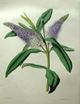
Veronica andersonii, now Hebe:
Price: US$170.00 (includes shipping costs)
LINK to LARGER image
From: Paxton's Flower Garden, 1850-52.
This print is produced using a zincographic process along with hand coloring and has the plate markings Pinx & Zinc.
Print size: 10 1/2 x 8 inches (26 x 20 cm) approximately.
Condition: Very good, with faint spot in the image just above the lower hoizontal leaf, please see larger image.
Text: text is included.
$95.00 USD
(includes shipping)
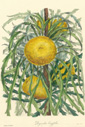
Long-leaved Dryandra, Dryandra longifolia
Price: US$95.00 (includes shipping costs)
LINK to LARGER image
From: Paxton's The Magazine of Botany and Register of Flowering Plants, London 1834-1849.
Hand-coloured lithograph
Artist: Samuel Holden
Print size: 9 3/8 x 6 3/4 inches (24 x 17 cm) approximately.
Condition: Very good, with small mark in the image, top right of centre, please see larger image.
Text: text is included.
$95.00 USD
(includes shipping)
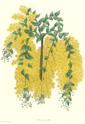
Wattle, Acacia vestita
Price: US$95.00 (includes shipping costs)
LINK to LARGER image
From: Paxton's The Magazine of Botany and Register of Flowering Plants, London 1834-1849.
Hand-coloured lithograph
Artist: Samuel Holden
Print size: 9 3/8 x 6 3/4 inches (24 x 17 cm) approximately.
Condition: Excellent, please see larger image.
Text: text is included.
$95.00 USD
(includes shipping)
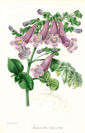
Jacaranda, Jacaranda tomentosa
Price: US$95.00 (includes shipping costs)
LINK to LARGER image
From: Paxton's The Magazine of Botany and Register of Flowering Plants, London 1834-1849.
Hand-coloured lithograph
Artist: Samuel Holden
Print size: 9 3/8 x 6 3/4 inches (24 x 17 cm) approximately.
Condition: Excellent, please see larger image.
Text: text is included.
