

New Zealand Antique Prints
& Rare Books
The On-line
Gallery
Prints may also be seen at:
New Zealand Birds’
(The Greytown Gallery)
65 Wood Street
Post Office Box 146
Greytown, 5742
Wairarapa
New Zealand
Mobile: +64 (0)27 508 5078
narena@nzbirds.com
William Lewin was a London born illustrator turned natural history artist. The first edition of his Birds of Great Britain, published in 1789, was a remarkable undertaking as it contained 323 original watercolor illustrations (271 birds, 52 eggs), each of which he painted 60 copies, together nearly twenty thousand individual pictures, is considered “the most amazing, enduring, and endearing one-man feat” in the entire field of English ornithology. It is considered to be “the rarest of all English bird books”.
According to Swainson, Lewin was “the best zoological painter, and one of the most practical naturalists of his day”. He was patronised by the Dutchess of Portland and various eminent men of his day.
Not surprisingly, the demand for Lewin’s fine work and the limits imposed by his method led him in 1793 to begin a second edition of etched plates, allowing for relatively more copies to be published. Lewin, who was reaching the end of his life, was joined in this project by his three talented sons, Thomas, Thomas William, and John William. It was published in parts from 1794 to 1801. The hand-coloring was carried out “under his immediate direction”.
Very little is known of the life of Lewin except that he was a fellow of the Linnean Society in 1791, and lived in the village of Darenth in Kent. It is believed that he died at the end of 1795; certainly the Linnean Society records for 1797 refer to him as “the late...” Mr. Lewin separated himself from his contemporaries in one important way — in that he was involved in the entire process — not only did he paint the various birds, but he also performed the actual engraving of the plates.
Link to:
Lewin Engravings
$720.00 USD
(includes shipping)
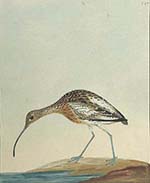
Curlew
Price: US$720.00 (includes shipping costs)
LINK to LARGER image
Artist: William Lewin
Plate 143, original water colour from William Lewin’s Birds of Great Britain (1st ed.), 1789.
Page measurement: 10 1/2 by 13 1/8 inches (27 x 34cm) with the image marked at 7 by 8 5/8 inches (18 x 22cm) approximately.
Text: no text.
Condition: Very good, please see photographs for foxing and marks in margins.
$720.00 USD
(includes shipping)
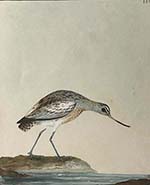
Grey godwit
Price: US$720.00 (includes shipping costs)
LINK to LARGER image
Artist: William Lewin
Plate 151, original water colour from William Lewin’s Birds of Great Britain (1st ed.), 1789.
Page measurement: 10 1/2 by 13 1/8 inches (27 x 34cm) with the image marked at 7 by 8 5/8 inches (18 x 22cm) approximately.
Text: no text.
Condition: very good with some foxing as to be expected from a print of such an age.
$1110.00 USD
(includes shipping)
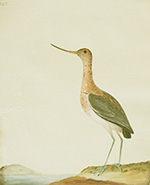
Red godwit
Price: US$1110.00 (includes shipping costs)
LINK to LARGER image
Artist: William Lewin
Plate 160, original water colour from William Lewin’s Birds of Great Britain (1st ed.), 1789.
Page measurement: 10 1/2 by 13 1/8 inches (27 x 34cm) with the image marked at 7 by 8 5/8 inches (18 x 22cm) approximately.
Text: no text.
Condition: very good with some foxing as to be expected from a print of such an age. There is some faint running of colour on the left image border. (Please see larger photos)
$610.00 USD
(includes shipping)
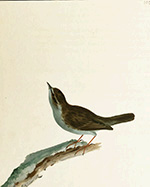
Hedge warbler
Price: US$610.00 (includes shipping costs)
LINK to LARGER image
Artist: William Lewin
Plate 102, original water colour from William Lewin’s Birds of Great Britain (1st ed.), 1789.
Page measurement: 10 by 13 inches (25.5 x 33.5cm) with the image marked at 7 by 8 1/2 inches (18 x 21.8cm) approximately.
Text: no text.
Condition: very good with very little foxing. (Please see larger photos).
$875.00 USD
(includes shipping)
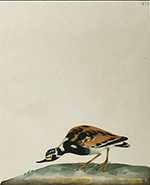
Turnstone
Price: US$875.00 (includes shipping costs)
LINK to LARGER image
Artist: William Lewin
Plate 179, original water colour from William Lewin’s Birds of Great Britain (1st ed.), 1789.
Page measurement: 11 by 13 1/4 inches (28 x 34cm) with the image marked at 7 by 8 1/2 inches (18 x 22cm) approximately.
Text: no text.
Condition: very good almost no foxing. There is a light mark on the image near the right border. (Please see larger photos).
$610.00 USD
(includes shipping)
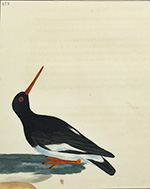
Pied Oystercatcher
Price: US$610.00 (includes shipping costs)
LINK to LARGER image
Artist: William Lewin
Plate 188, original water colour from William Lewin’s Birds of Great Britain (1st ed.), 1789.
Page measurement: 10 3/8 by 13 3/8 inches (26.7 x 34cm) with the image marked at 7 by 8 5/8 inches (18 x 22cm) approximately.
Text: no text.
Condition: very good with some foxing and two possible paint drops, one in the image and one in the bottom margin. (Please see larger photos).
